
Talks about
Insights & ideas
The through-line
Everything Peter s'Jongers says circles back to a single idea: a company and the people in it grow each other, or neither grows. He calls it symbiosis, and he means it structurally rather than sentimentally. "Als het bedrijf groeit dan kan het kansen geven aan de mensen die in het bedrijf zitten, die op hun beurt ook weer groeien en daardoor groeit het bedrijf." [2] A company must grow in order to keep growing, because growth is what generates the opportunities that keep good people developing, and their development is what drives the next round of growth [2]. The corollary runs through his views on leadership, planning and culture alike: the CEO's job is to build the conditions in which several hundred people act, not to be the person who acts.
That position has stayed constant across 28 years of building Protime to more than 400 employees, and it shapes how he framed his own step aside from CEO to chairman [2]. The reflex is always to push agency downward and outward, whether to teams defining their own priorities, to employees making daily decisions, or to team members choosing their own colleagues.
On leadership as a frame, not a set of decisions
Leadership, in his account, is creating the frame within which people take the hundreds of daily decisions themselves; if the CEO is taking every decision, something has gone wrong [1]. He puts the arithmetic bluntly: "Ik zou graag hebben dat die 400 mensen bij Protime elke dag een beslissing nemen. Als die alle dagen een beslissing nemen, dan moet ik er waarschijnlijk nooit een nemen." [2] The precondition is that mistakes are not punished, because a framework only works if people dare to use it [2].
On pride as the whole of culture
His test for culture is emotional and simple. "Na verliefdheid is trots volgens mij de mooiste menselijke emotie die we hebben." [1] And "wanneer alle medewerkers trots zijn op het bedrijf, op het team, dan ben je er qua bedrijfscultuur" [2]. If everyone is proud, there is nothing further to do about culture [1]. What matters is where the pride comes from: not from working on a sexy product, but from people's own added value [1].
On team culture eating company culture for breakfast
Culture is more powerful at team level than at company level, because a team of ten to fifteen people working together daily can steer it far more concretely than any company-wide programme [2]. That is why team members are heavily involved in recruitment, and why the first filter is fit with the team rather than fit with the company [2]. It is also why he treats company culture as the compilation of its teams rather than something broadcast from the top.
On planning in short matches rather than long strategies
Companies lose themselves in long-term strategic goals that almost no employee can actually influence [2]. His alternative is short-term "matches to win" that every employee can affect, which he justifies on the grounds that in fast-changing times even a yearly plan is often unsound [2]. Protime's annual State of the Union is the mechanism: an internal planning document that deliberately contains no financial figures at all [2]. Each team defines qualitative priorities derived from the company's values, mission and strategy, and the compilation of all the teams' documents forms the picture of the company [2]. He notes a second benefit that is easy to miss, which is how useful the document turns out to be for onboarding new hires [2].
On entrepreneurship without a gap in the market
He regards the hunt for a market gap as overrated. If you want to be an entrepreneur, you can undertake almost anything, provided you do it slightly differently or slightly better [2]. Protime is his own evidence: it invented nothing new, it simply saw in 1995 that with the rise of Windows the value would shift from hardware boxes to software [2]. The scarce resource is not the idea. "Belangrijkste reden is de juiste mensen vinden." [2] And he is optimistic about supply: "Iedereen heeft talent... er is ongelooflijk veel talent, ook in Vlaanderen." [2]
On arguing well with a co-founder
The key to co-founder symbiosis is the ability to argue [2]. That means two distinct capacities. The first is daring to speak up rather than letting resentment build. The second, which he treats as equally important, is being able to reconcile, forgive and forget [2]. One rule governs all of it: employees should never notice the conflicts [2].
On what he got wrong
He names two regrets. He should have set up an advisory board much sooner, which would have made him feel less alone in the role [2]. And in the early years he was not decisive enough about letting go of people who were unhappy or toxic within a team [2]. Both are failures of the same kind, tolerating a situation instead of changing its structure.
On negotiating an outside shareholder
When SD Worx came in as shareholder, the condition he negotiated was not financial but definitional: clear agreements on expectations, so that he could keep feeling like an entrepreneur and continue to steer the company with its own culture and its own growth path [2].
On energy, choice and time
For roughly ten years he has kept a daily diary recording what gave him energy that day and what cost him energy, a deliberate practice for managing passion and energy consciously rather than by instinct [2]. The same discipline applies to commitments, and here he identifies the harder half of the problem: "Kiezen wat ik ga doen is niet zo gigantisch moeilijk, maar kiezen wat ik níet ga doen is heel moeilijk." [2] His summary of the whole matter is the line he keeps returning to: "Time flies, but you are the pilot." [2]
Takeaways
- Judge your culture by one measure: whether every employee is proud of the company and the team. If they are, you are done [1][2].
- Design the frame, then get out of the way. If 400 people each take a decision every day, the CEO should almost never have to take one [1][2].
- Put culture work where it actually bites, at team level, and let team members lead recruitment on team fit first [2].
- Replace multi-year strategic goals nobody can influence with short-term matches to win that everyone can affect, because even annual plans are often unsound in fast-moving markets [2].
- Write an annual planning document with no financial figures in it, built bottom-up from each team's qualitative priorities, and reuse it to onboard new hires [2].
- Stop looking for a gap in the market. Take an existing activity and do it slightly differently or better, as Protime did by betting in 1995 that value would move from hardware to software [2].
- Set up an advisory board earlier than you think you need one, and act faster on people who are unhappy or toxic in a team [2].
- Keep a daily record of what gave you energy and what cost you energy; deciding what not to do is much harder than deciding what to do [2].
In the news
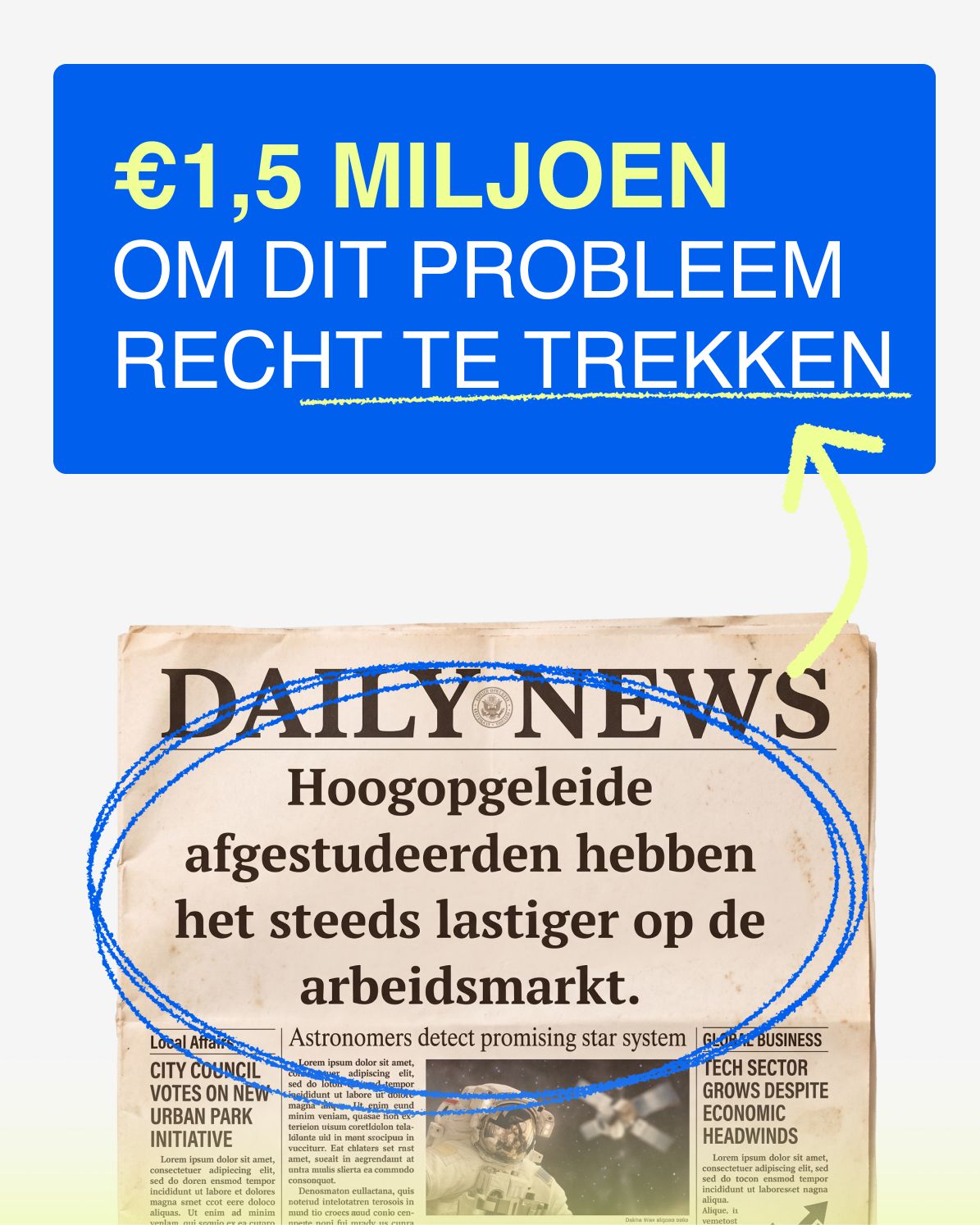
- WE RAISED €1,5M. WE. DID. THAT. (YES THIS DESERVES ALL CAPS) 1,5 miljoen euro opgehaald in onze allereerste fundingsronde ooit, insane. Thanks to all our investors 🙏 Jullie zorgen ervoor dat we kunnen blijven groeien en het grootste probleem van deze generatie kunnen aanpakken: de skillskloof. Want deze treft namelijk iedereen op hun eigen manier, of je nu werkgever, werknemer, of bijna/net afgestudeerd bent. → Werkgevers: geen idee welke skills er al zijn binnen hun team. → Werknemers: geen idee waar ze zelf in uitblinken en
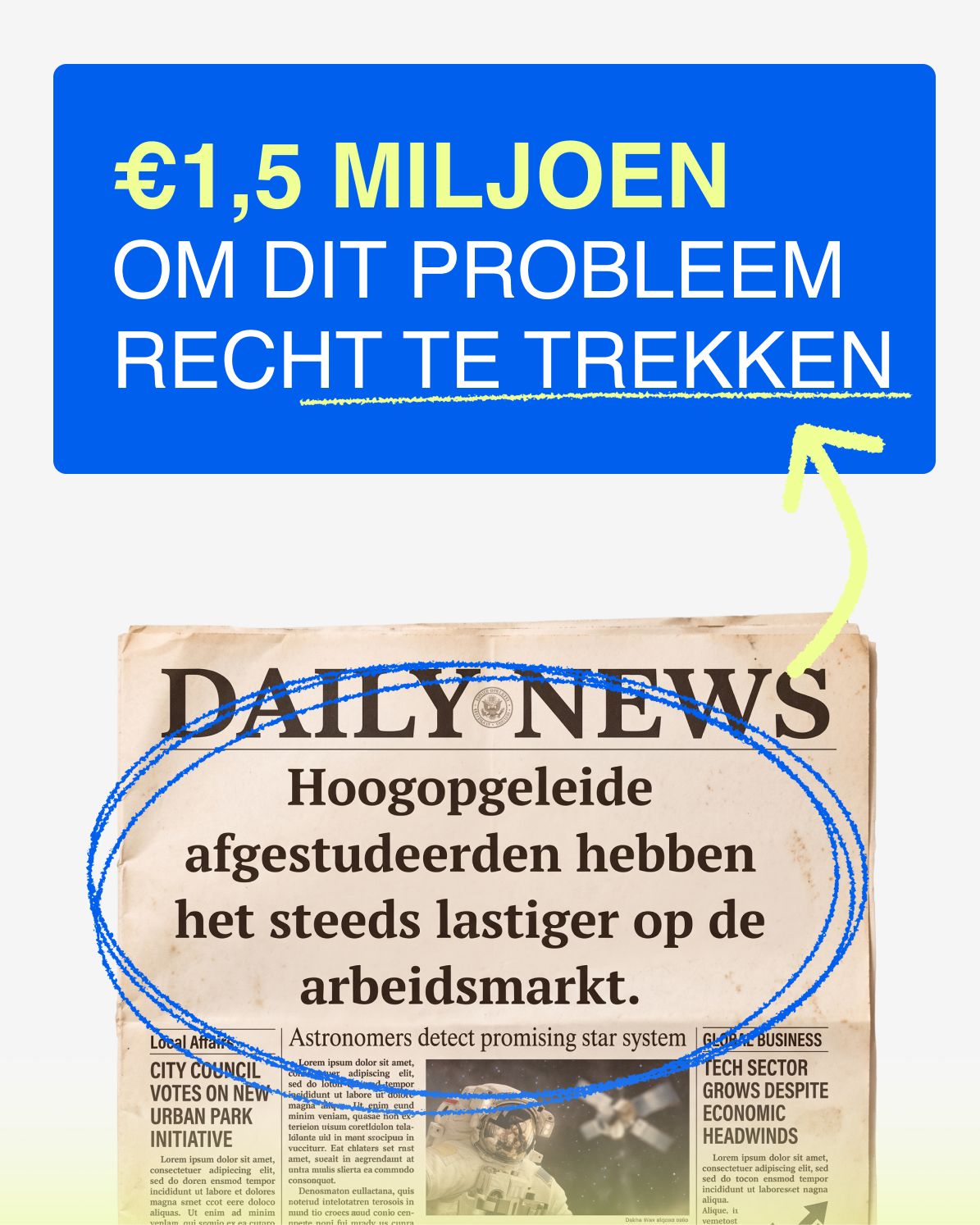
- WE. DID. THAT. (YES THIS DESERVES ALL CAPS) 1,5 miljoen euro opgehaald in onze allereerste fundingsronde ooit, insane. And even better: chances are this money is about to fix a problem you have right now. De skillskloof van vandaag raakt namelijk iedereen op hun eigen manier, of je nu werkgever, werknemer, of bijna/net afgestudeerd bent. → Werkgevers: geen idee welke skills er al zijn binnen hun team. → Werknemers: geen idee waar ze zelf in uitblinken en hoe ze daarin groeien. → Onderwijs: loopt gewoon achter op de snel
Related profiles


This page shows public professional information only, each fact cited. Is this you? send a correction, or ask for removal within 24 hours, no questions asked.